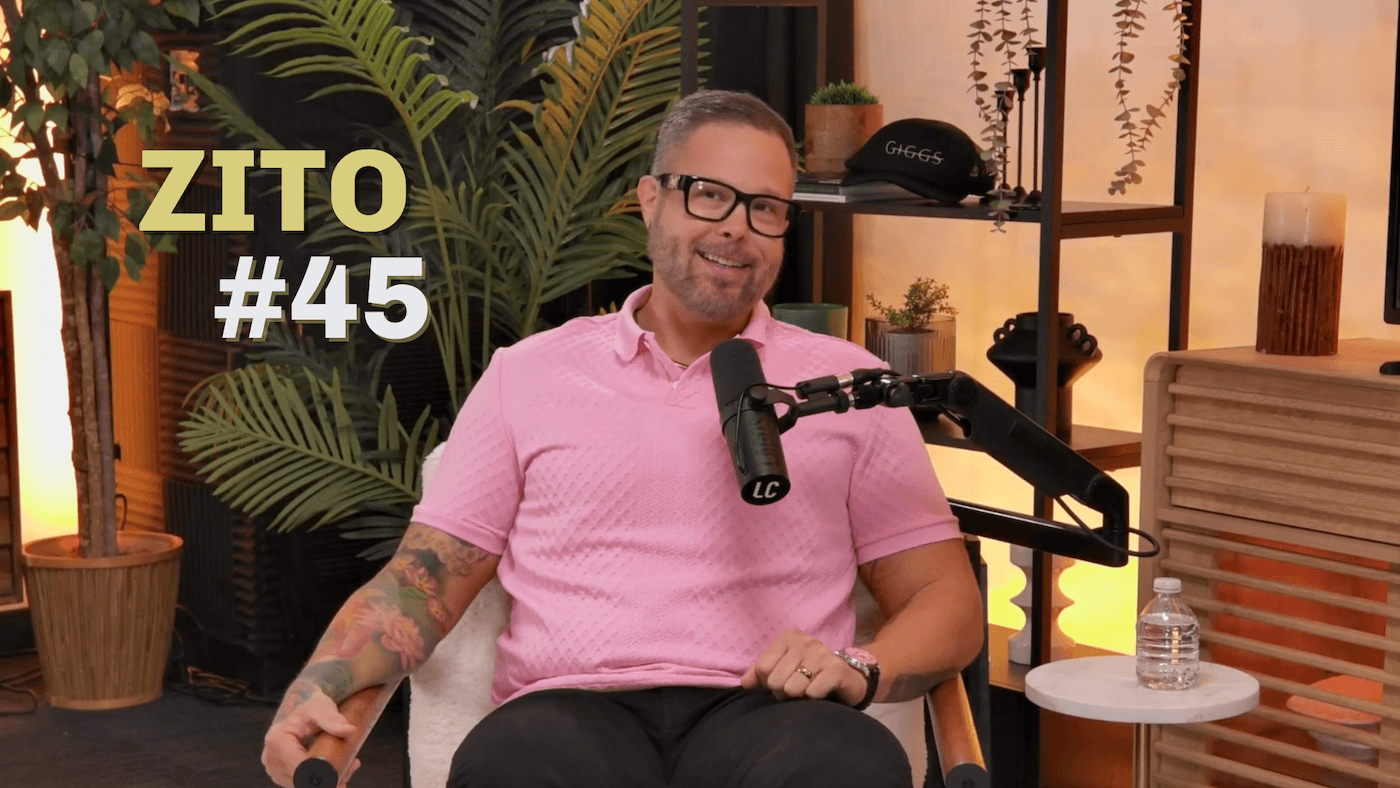
#45 Zito | Touring doesn’t have a leadership problem. It has a leadership gap.
In live events, you can learn a thousand technical skills: patching systems, advancing venues, building stages, solving problems under pressure, and getting a show in and out when everything is working against you.
But as Zito puts it, none of that automatically makes you a great production manager, because the job isn’t robots moving cases. It’s people—people who are exhausted, stressed, homesick, sleep-deprived, and still expected to perform at a high level, day after day.
And that’s the heart of this episode: touring needs qualified leaders more than it needs anything else.
Meet Zito
With 25+ years in touring, Zito has worked his way from vans and small clubs to global stadium runs, supporting artists across pop, rock, and everything in between. He’s seen the old-school culture, the “trial by fire” mindset, and the cracks it creates.
Now, he’s focused on building teams that last—through better structure, clearer communication, mentorship, and leadership that’s rooted in respect.
The moment that changed his approach: boundaries
Zito didn’t always have boundaries. Like a lot of high performers, he used to equate availability with excellence.
Then came a breaking point: a period where even “vacation” wasn’t rest—late-night calls, middle-of-the-night emails, constant pressure to be reachable. His takeaway was simple and sharp:
Work will expand to fill the space you give it.
If you’re always available, people will always take.
Now he sets expectations clearly: if it’s truly an emergency, call, text, and he’ll pick up. If it’s not, it can wait.
One of his best boundary tools is also the most human:
“Is this important enough for me to step away from dinner with my wife?”
That single question forces clarity, resets urgency, and, half the time, makes the “problem” disappear by tomorrow.
Decision fatigue is part of the job, whether you admit it or not
Production management is a constant series of tradeoffs: logistics, budgets, safety, timelines, people, and priorities, all colliding at once. Zito doesn’t romanticize it. He names what most leaders feel but don’t say out loud:
By the time you get home, you don’t want to make a single decision—especially not “What do you want to eat?”
His point isn’t just “PM life is hard.” It’s that leaders need systems and space to stay sharp, because fatigue creates short fuses, rushed decisions, and avoidable mistakes.
“Gig hugging” is not a badge of honor
One of the most practical parts of the episode is how Zito structures schedules to protect sleep and reduce burnout—especially at stadium scale.
Instead of grinding crews into 20-hour marathons, he’d rather split the workload:
A solid workday on pre-production,
A real evening off,
A later call on show day,
Better rest, better focus, better outcomes.
He’s seen the difference in real time: more productivity, fewer mistakes, fewer conflicts, and a crew that can actually lead itself.
And he calls out a touring habit that quietly fuels burnout:
“Gig hugging”—hanging around the building all day, every day, just because that’s what touring culture expects.
His message is refreshingly blunt: Get out of the building. Walk, gym, dinner, quiet time—whatever it takes to reset your brain, and come back better.
Leadership is building a team, not controlling every detail
Zito’s leadership style shows up in the way he builds structure without micromanaging. With crews that can approach 90 people (and far more when you count steel, drivers, and additional teams), he relies on strong department leadership:
daily crew chief meetings,
clear plans,
ownership pushed out to the team level,
and accessibility without chaos.
He wants people to have autonomy, because autonomy builds competence, and competence builds trust.
Mentorship is the difference-maker, and the culture is shifting
One of the most powerful stories in the episode comes from a masterclass series Zito taught in Taiwan. The premise: in some communities, mentorship isn’t the norm—it’s seen as giving away your “secret sauce.”
The result is predictable: people struggle longer, excellence stalls, and the industry doesn’t improve.
Zito walked away with a mindset that’s shaped his leadership ever since:
Nobody can replicate your full journey.
Teaching others doesn’t diminish you.
It strengthens the industry, and it strengthens your team.
He believes touring has started shifting after COVID—partly because the shortage of skilled leaders exposed the cost of hoarding knowledge.
The touring truth nobody outside the road understands
Zito also makes a strong point about empathy across the ecosystem: agents, managers, and anyone making decisions that affect touring should experience the road firsthand.
Not for “cred,” but for understanding. Routing isn’t just dots on a map. It’s holds, sports schedules, playoffs, shipping lanes, overnight drives, labor realities, and problem-solving at scale.
His take: spend a week on a bus, and the decisions will change.
A quote worth keeping
“You don’t always need the best, most qualified tech. You need the person who can lead people.”
That’s the through-line of the whole conversation: the next era of touring belongs to leaders who can build teams, protect humans, and still deliver excellence.
Rapid-fire highlights (because it’s Zito)
Favorite venues: the easy ones (loading docks, short pushes, smooth load-ins).
Loves Japan and Asia: the fans, the culture, the energy.
Most grueling roles: carpenters, steel teams, and high-pressure playback positions.
Best early path: vendor-side roles with training, systems, and structure.
Best road splurge: a great dinner (especially sushi).
The bigger takeaway: touring can be better
Zito’s optimism is earned. He’s not pretending the job is easy. He’s saying the “suffering” part is not mandatory, and leaders can design a better way.
More rest. Better boundaries. More mentorship. More compassion.
And better shows, because of it.
