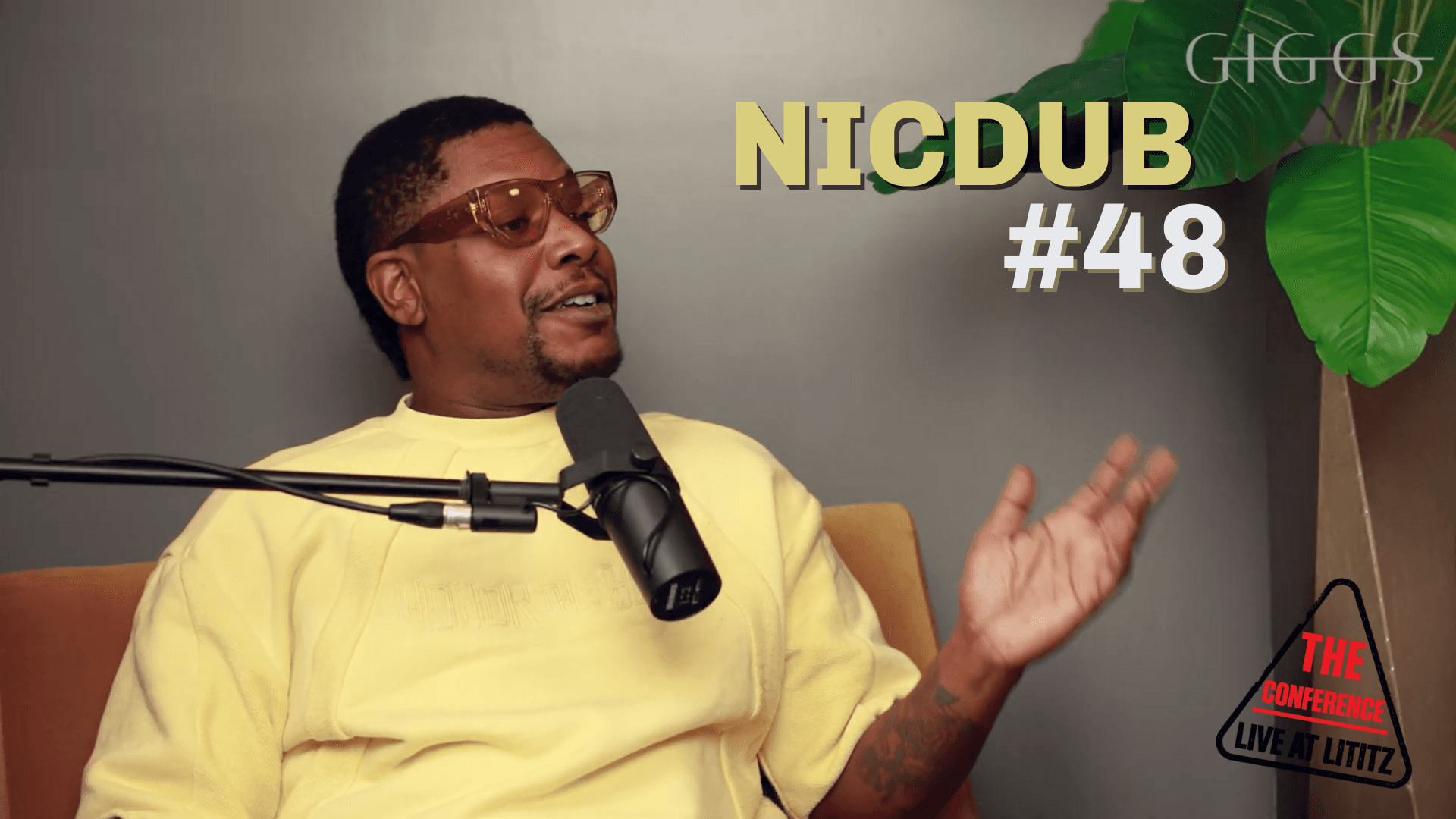
#48 Nicholas Weldon (nicDUB) | Why Directing Live Video Is a Dance
If you work in live events, you already know the truth: the show doesn’t slow down because something broke. It doesn’t pause because comms are messy, the cue changed, or a piece of gear is having a bad day. It keeps moving.
That’s why this episode—recorded live from Rock Lititz in Lititz, PA—hits so hard for anyone in touring, live production, or concert video.
In The Giggs Podcast #48, host Nikki Sanz sits down with Nicholas Weldon “nicDUB”, a veteran live video director and touring roadie with more than two decades of experience shaping how audiences experience music through screens, cuts, and storytelling.
Nikki opens the conversation by highlighting nicDUB’s deep touring résumé, including work with P!nk, Kings of Leon, Pierce The Veil, Ricky Martin, Tina Turner, Rihanna, Bruno Mars, Cirque du Soleil, Google, Avril Lavigne, and more.
But what makes this episode stick isn’t the name-dropping. It’s nicDUB’s philosophy:
"Directing is a dance."
Not a dictatorship. Not constant barking. A dance—built on trust, taste, and tight communication.
nicDUB’s approach to concert video direction: trust first, then select
nicDUB describes the best live video direction as something closer to curation than control. He doesn’t want to dictate every operator’s position every second. He wants camera ops who can feel the show, hunt moments, and bring him options worth cutting to.
His core instruction to operators is both simple and demanding:
"Listen to the music, feel the music, and shoot it the way you feel it."
That isn’t permission to freestyle without boundaries. It’s a leadership standard. It means you’re expected to understand pacing, emotion, and stage dynamics well enough to anticipate what matters before you’re told.
In other words: you’re not just capturing coverage. You’re contributing to performance.
The “back row” mindset: live event video is about connection
One of the best ways to describe nicDUB’s craft is this: he’s obsessed with audience connection. Especially the people who aren’t close.
He shares a pivotal memory of watching a show from the very back seat and realizing what he wanted his career to be: making sure the person in the last row still feels something real.
That’s the value of a great live event video team. When it’s done right, video becomes the bridge between the stage and the entire room—whether you’re in the pit, the bowl, or the nosebleeds.
What nicDUB looks for in camera operators: hunger, not perfection
Nikki asks what separates operators nicDUB wants to work with from the ones he has to manage harder.
His answer: hunger.
You can see it in how they move, how they frame, how they hunt for moments, and how they constantly search for the next compelling shot. nicDUB jokes about “tally whores”—operators hungry for that tally light because it means they’re contributing something worth showing.
And here’s the leadership twist that applies way beyond the video department:
nicDUB doesn’t waste his energy micromanaging the people who are already locked in. He focuses his coaching on the people who are drifting, tired, or going through the motions.
Not by tearing them down, but by giving real-time direction and positive reinforcement to bring them back into the game.
Touring leadership lesson: don’t create a morale problem on comms
Live events are direct by necessity. Still, nicDUB makes a sharp point about how leaders talk on headset.
Because it’s live, you can’t dwell. You can’t spiral. You can’t turn one mistake into a morale meltdown that affects the whole crew.
He describes the “ripple effect” of berating people: it doesn’t just impact that one operator. It spreads—through confidence, focus, and decision-making—until the entire team gets worse.
So his leadership goal is simple:
"Keep everybody lifted up, keep everybody engaged, and keep everybody moving forward."
In a touring environment, that’s not a soft skill. It’s operational.
How many cameras does a live video director watch?
Nikki asks the kind of question people outside video always wonder: how many angles are you tracking at once?
nicDUB shares that the biggest show he’s personally directed involved 14 cameras, typically viewed on two screens using a multiview layout. He’s seen directors manage more, but even at 14, you’re making constant decisions—fast.
He also explains live direction like sports strategy:
Sometimes it’s zone coverage: “You cover stage right.”
Sometimes it’s man coverage: “Don’t leave your artist.”
Sometimes it’s controlled chaos: “As they crisscross, trade off, and keep it clean.”
The point isn’t rigid rules. The point is alignment—so the team can operate without needing nonstop commands.
The moment every touring pro will understand: when everything breaks, and the show is still live
Then comes the story that feels like a touring rite of passage.
nicDUB describes a high-stakes show where water starts pouring directly onto the desk and gear. Buttons fail. The board degrades. Suddenly he’s limited—effectively cutting between two cameras—while still trying to deliver a show that looks intentional.
He doesn’t panic. He simplifies. He adapts. He coaches the operator who’s still live. He finds a way to keep the show watchable, musical, and connected.
And the wild part?
Most people in the audience never noticed.
That’s the job: not perfection—recovery.
Key takeaways for live event pros in touring, production, and video
Whether you’re a video director, a camera op, a crew chief, or a department lead, nicDUB’s framework translates:
Start with trust: give people zones, goals, and clarity.
Hire for hunger: energy and awareness create better shots than compliance.
Coach without crushing morale: comms leadership affects the entire show.
When failure hits, simplify fast: keep the story intact, and keep moving.
This conversation captures one of the most important live event training and production hubs in the industry—reminds you why touring culture is so unique: it’s creative, technical, and relentlessly real-time.
And if you’re lucky enough to work with leaders who see directing as a dance, the whole crew performs better.
