#53 Stage Wives | How To Support Touring Families at Home
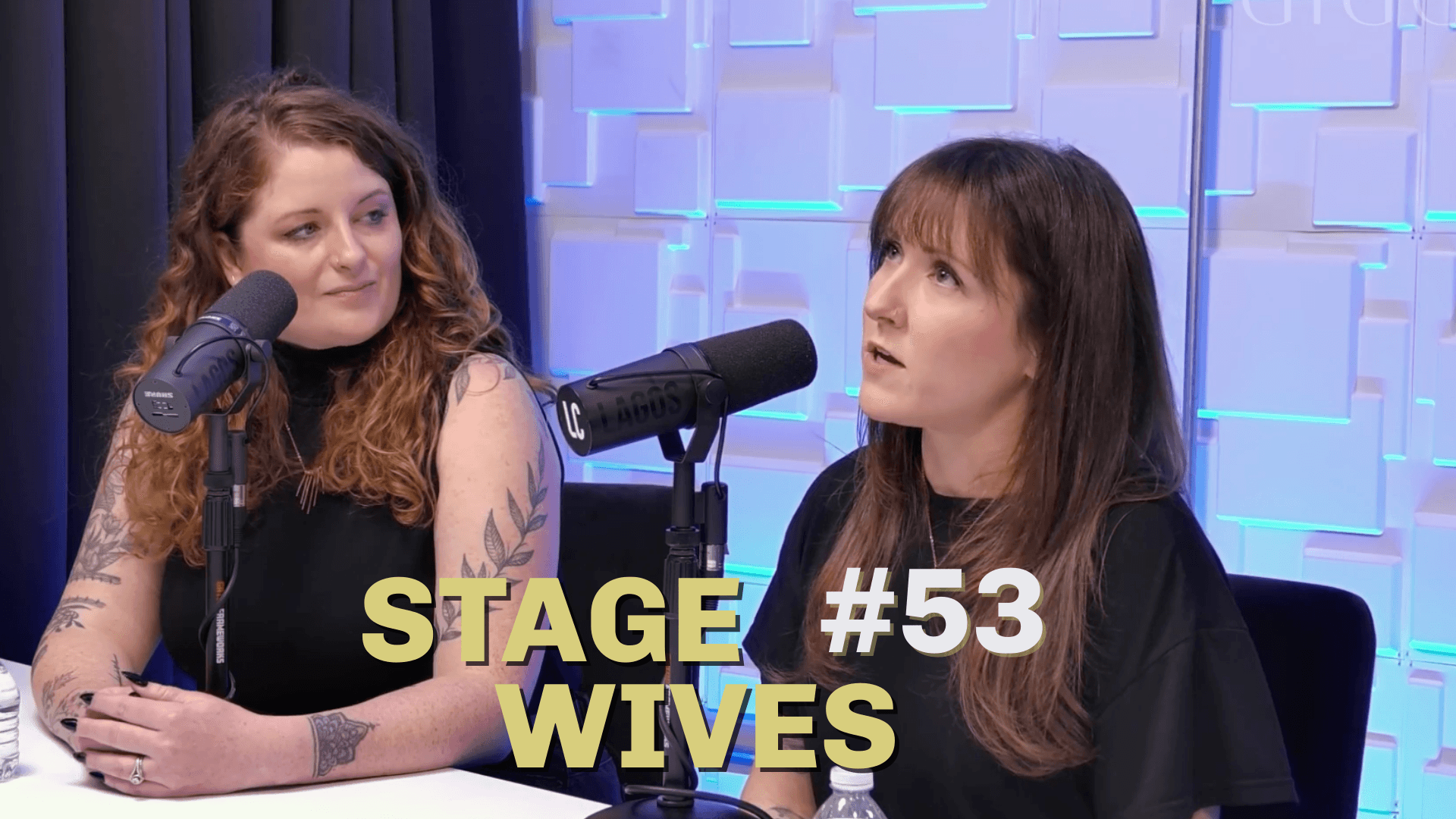
Stage families don’t just deal with long days and weird schedules. They deal with distance that shows up in kitchens, calendars, bedtime routines, and the parts of a relationship you can’t “power through.”
In this episode of The Giggs Podcast, Nikki Sanz sits down with Rachel Smith and Rhyan Shirley, the founders of Stage Wives—a Nashville-based support community for women whose partners work in the touring industry. They talk candidly about what happens at home while tour rolls on: the isolation, the re-entry challenges, the parenting load, and the emotional whiplash of being expected to hold it together without making anyone feel guilty.
This isn’t theory. Rachel and Rhyan share real frameworks and simple practices that help touring couples communicate better, reconnect faster, and stay aligned when life is loud and time is short.
Highlights — What You’ll Learn
A communication order that prevents spirals: facts → feelings → “listen or fix?”
How touring impacts kids (and why ages 3–4 can be especially tough)
Staying connected when calls don’t line up: creating routines
A “two-week / three-week” rhythm some families use to stay connected
What to do when therapy doesn’t fit touring realities
Tools they’re building for stage families: Touring Tales and The Invisible Backpack
The part of touring that doesn’t get a badge
The touring industry is built on resilience. But “resilience” can turn into silence fast—especially for the person at home who doesn’t want to sound needy, dramatic, or ungrateful.
Stage Wives exists because a lot of women are carrying the weight of tour life alone—parenting, running a household, navigating emotional stress, and managing the mental load that never makes it into a post-show recap. That’s the gap they’re trying to close: a private community and resource ecosystem for touring families to feel supported and less isolated.
And even if you’re not “a stage wife,” the bigger takeaway applies to anyone in live events: if the home front is collapsing quietly, the career eventually pays for it.
A communication reset that actually works in touring life
One of the most practical moments in the conversation is the way Rachel and Rhyan break down how to start a hard conversation without triggering defensiveness.
They describe leading with facts first, then moving into feelings:
“Here’s what happened” (facts)
“Here’s how I’m feeling because of it” (feelings)
Then they add a question that can save a ton of time—and a ton of unnecessary conflict: Do you need me to listen, or do you need me to fix?
That detail matters because touring culture tends to reward problem-solvers. But the person at home isn’t always asking for a solution—they’re asking for connection, reassurance, and to feel like they’re not carrying everything alone.
“I start with facts, then feelings… and then: do you need me to listen or fix?”
Kids feel absence differently than adults do
Rachel and Rhyan also talk about something touring families know in their bones: kids don’t understand “the job.” They understand presence and absence.
They point out that for young kids, especially around ages 3–4, “dad leaving” can hit hard. Even if the touring parent is doing everything right, the rhythm can still feel confusing: the parent leaves, returns, the child reacts, and then the parent leaves again—sometimes before the kid fully settles.
The takeaway isn’t guilt. It’s awareness. When you know what’s actually happening emotionally, you can build rhythms that help kids feel safer and more connected.
Staying “present” from the road: small tools, big impact
Touring life breaks the normal rules of communication. Calls don’t line up. One person is heading to doors, the other is in bedtime chaos. So Stage Wives leans into tools that work asynchronously.
They talk about using apps like Marco Polo for video messages kids can replay anytime, plus nightly “Dora the Explorer style” videos where the touring parent asks questions and pauses so the child can respond.
It’s not just cute. It’s a structure that helps the child experience the touring parent as present and engaged—even when time zones and schedules don’t cooperate.
When therapy doesn’t fit the touring lifestyle
Another important thread: even when families try to get help, the help isn’t always built for them.
They describe how hard it can be to find counselors who truly understand touring life—because you can spend the entire session just explaining how this lifestyle works. That mismatch can make people give up on support prematurely, or feel like they’re “too complicated” to help.
This is also why Stage Wives emphasizes connecting people to resources that understand the industry’s patterns and pressures.
The kids resources they’re building: Touring Tales + The Invisible Backpack
Rachel and Rhyan share that Stage Wives is creating a children’s book series called Touring Tales, with the first book publishing in September.
The first book is called The Invisible Backpack, described as a therapy tool to help kids connect with their fathers and understand what they do on the road.
That’s the bigger theme of the episode in one sentence: touring families don’t just need encouragement—they need tools, language, and repeatable practices that make connection easier.
Sustainable touring includes the people at home
The live events world is getting better at talking about burnout on show site. This conversation is a reminder that burnout can start quietly at home too, until it becomes unavoidable.
If you’re touring, share this episode with your partner and start these important conversations.
If you’re at home, know this: needing support doesn’t mean you’re failing. It means you’re human.
Check out all Stage Wives has to offer at their website: https://stagewives.com/
Follow The Giggs Podcast for more behind-the-scenes conversations, and check out Giggs at https://giggs.live
