#57 Inside Kingfisher by LEO Events: How Virtual Production Works in Nashville
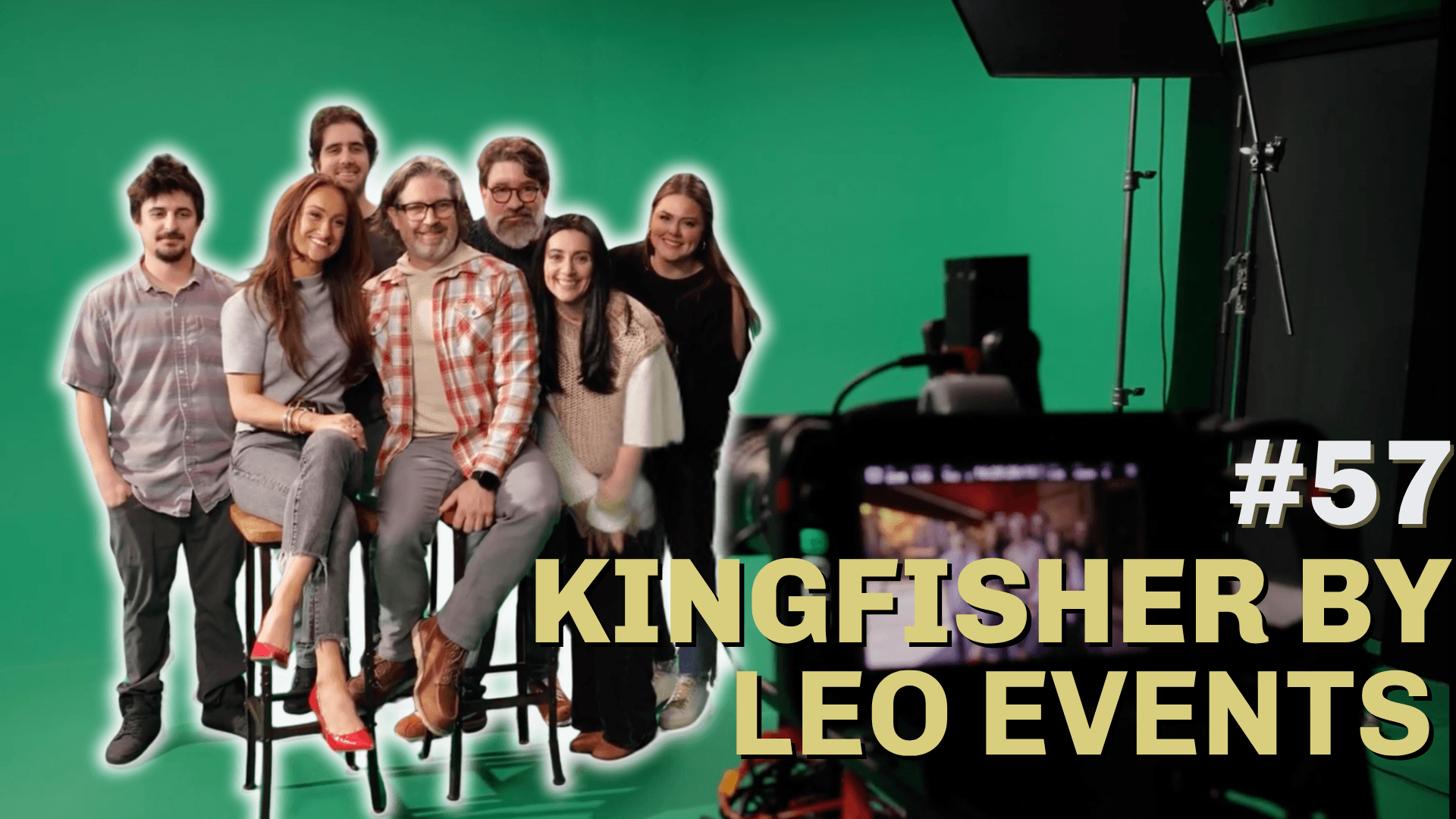
In Nashville, Tennessee, just off Music Row in Hillsboro Village, Kingfisher Production Studio by LEO Events is doing something that feels equal parts technical and creative. On this episode of The Giggs Podcast, Nikki Sanz steps inside the studio to see how the team builds virtual worlds, lights them, shoots them, and finishes them in post.
What makes this episode useful is that it does not stay at the surface. It shows the people behind the process. You hear from the production, studio, animation, and editorial team members who actually make the work happen. If you work in live events, production, content, or post, this is a strong look at how virtual production really works when it is done by people who know both craft and storytelling.
Highlights — What You’ll Learn
How Kingfisher uses virtual production inside its Nashville studio
Why lighting, tracking, and Unreal Engine have to work together
What clients often misunderstand about the process
How post-production is planned before the shoot even starts
Why this workflow can reduce travel and location headaches
What skills matter most in studio, animation, and editing roles
A Nashville studio built for creative control
The episode opens with Stacey Ladd, Sr. Director of Media Production, who introduces LEO Events’ newest office in Nashville. The space was redesigned to feel more collaborative and creative, and it sits inside a building with real local history behind it. Stacey explains that the building was originally designed by Earl Swenson and later became part of Music Row’s creative history.
That context matters because Kingfisher is not presented as just a tech box with cameras in it. The team clearly sees the space as part of a creative lineage in Nashville. From the beginning, the studio feels tied to both storytelling and production craft.
LEO Events itself brings a broad client background into the studio. Stacey describes the company’s work across brand activations, general sessions, B2B events, B2C events, music festivals, and tasting events, with clients and projects reflected across the office murals.
“We redesigned the space to just make it feel more collaborative, more creative.”
What virtual production actually looks like on set
Inside the studio, Brett Clark, Director of Studio & Editorial, breaks down how the environment works. The key point is that the illusion only works because the real and unreal are constantly interacting. The chair is real. The table is real. The lighting is real. But the environment extends far beyond the physical set through Unreal Engine and camera tracking.
What comes through in Brett’s walkthrough is that this is not a shortcut. It is a different kind of production problem-solving. Instead of traveling to a location, dealing with permits, or waiting for access, a team can build or recreate the environment and then control it on set.
That has obvious value for corporate shoots, branded content, and concept-driven productions. A client can ask for a Paris sidewalk, a studio in New York, or a custom environment with specific visual details, and the team can design for that use case rather than settling for what already exists.
“We’ve made it as big as the world needs to be.”
Brett also makes one of the most practical points in the episode: the difference is not the equipment alone. The difference is the team. Kingfisher’s edge is how the people collaborate across technical and creative roles to pull off the illusion well.
Why lighting and motion tracking matter so much
Tyler Montanino, Video Production Specialist, takes the conversation deeper into the technical side. He explains how the camera tracking works, how the lens data is calibrated, and how the green screen has to be lit precisely enough for the final image to hold together.
This is one of the most useful parts of the episode because Tyler shows that virtual production still depends on old-school visual discipline. Lighting, camera movement, optics, and timing still matter. In fact, they may matter even more when the real and digital worlds have to match frame by frame.
He also talks about the trust clients need when they step into a world that is not physically there. Seeing the environment live on set helps with that. Instead of asking people to imagine the final result, the studio can show them something believable in real time.
“You’ve got to get messy. You’ve got to make mistakes.”
That line applies to the craft itself too. Tyler describes the amount of time it takes to learn this work and how much failure is involved in getting good at it. That makes the episode especially useful for people exploring technical careers in production.
How Unreal Engine turns reference into believable worlds
Matt Dimodica, Senior Media Animator, explains how the digital environments are built and why Unreal Engine changes the process. Because it renders in real time, the team can see immediate feedback, move quickly, and collaborate live with lighting and camera teams.
Matt’s perspective helps demystify the “world building” side of the process. He explains that realistic scenes start with reference. Then the team uses scanned assets, environmental lighting data, and detailed textures to build spaces that feel believable. He points out that imperfections are what sell the image. Cracks, fingerprints, grime, and wear all help the brain accept the scene.
He is also honest about the limitations. Some environments are harder than others. Large bodies of water and highly dynamic movement can still be tough to pull off convincingly. That honesty makes the whole conversation stronger because it does not oversell the technology.
Why editorial starts before the shoot
Josh Ickes, Senior Editor, closes the episode by showing how post-production fits into the workflow. One of the best takeaways here is that post does not start after the shoot. It starts much earlier.
Josh explains that the team needs to talk about angles, coverage, and how the footage will work in the edit before production begins. In a virtual environment, the possibilities can feel endless, but that only makes planning more important.
He also explains what editors receive after a shoot: the camera capture, the composite, the key, and other separate elements that can still be refined in post. That structure gives the team flexibility. It also makes long-term reuse possible, since some background elements can be swapped or updated later.
For anyone who has ever heard, “Can’t we just change that quickly?” Josh’s section will feel familiar. He points out that clients often underestimate how much even small changes affect rhythm, perception, and storytelling.
Why this matters for live events and branded storytelling
The real value of this episode is that it connects technology to practical use. Kingfisher is not just showing off flashy tools. The team is focused on storytelling, production efficiency, and creative control.
For live events, brand teams, and production professionals, that matters. Virtual production can reduce travel, simplify logistics, and open up new options for visual storytelling. But it still depends on taste, planning, and strong collaboration across departments.
If you want to hear how a modern studio team thinks through all of that, this episode is worth your time.
Listen to The Giggs Podcast, follow along for more behind-the-scenes stories from the live events world, and explore more at Giggs.
To learn more about the Kingfisher Production Studio and LEO Events, visit https://leoevents.com/ and on Instagram at https://www.instagram.com/kingfisher.made and https://www.instagram.com/leoevents/
