#62 Ryan Maag | From Backup Dancer to Creative Director: The Ecosystem Behind the Artist
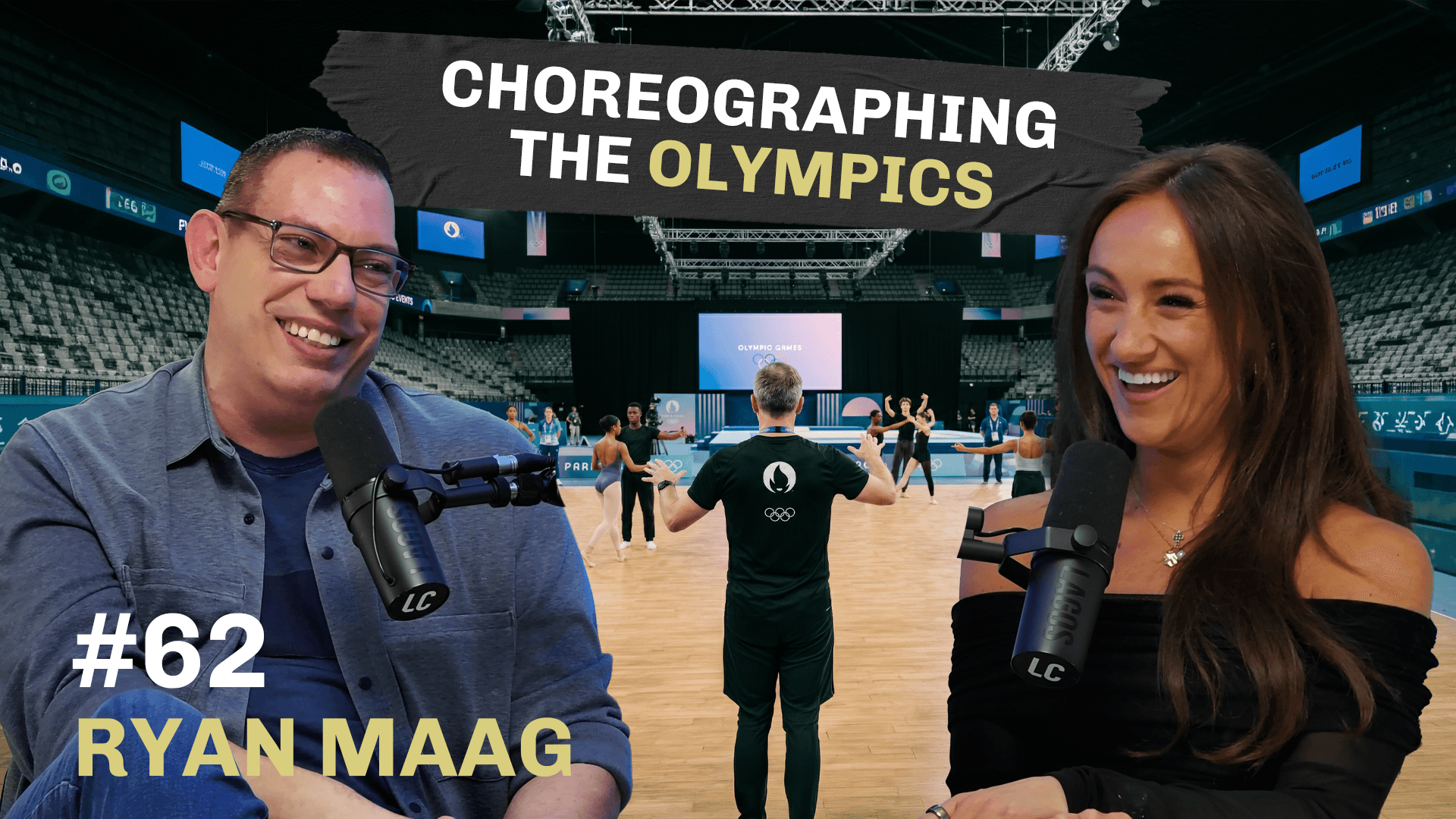
Ryan Maag figured out the math early. He was about 19, dancing professionally, working backup tours, and someone explained how the money actually worked. He's never gone back.
From a backup dancer on the Weird Al Yankovic tour in 1998 to creative director for the NFL, the 2018 Pyeongchang Winter Olympics, and the D-Day ceremonies in Normandy, France, Ryan has spent two-plus decades building one of the most unusual careers in live entertainment — always from the inside out, always from the stage up. Now he runs TSP Creative in Nashville, an artist development ecosystem he describes simply as "zero to Coldplay."
Highlights — What You'll Learn
How a backup dancer becomes a creative director
Why the music industry has inverted and brand identity now leads
What the "end goal" question in a scope meeting reveals about whether an artist is ready
Why a good creative director works with vulnerability, not around it
How Ryan thinks about AI as a creative tool (input, not output)
What separates a stadium artist from an arena artist
The Long Way Up
Ryan started dancing at two years old. Theater background, school productions, the whole thing. First tour: Weird Al Yankovic, 1998. He was backup dancing. First big one-off gig he loved: the MTV VMAs. The Macy's Parade is still a favorite because theater people are allowed to be completely over the top.
But the turn happened when he started choreographing. Not just because the money was better — though it was — but because creating it turned out to be where he actually lived.
"I really love creating it and watching it come to life. From body movement to staging to the productions — that's where I found my moment."
The NFL brought the scale. He started with pom squad choreography for the Philadelphia Eagles and Denver Broncos, then built up through pre-game shows, quarter performances, sideline production, and eventually halftime. The NFL Down Under bowl in Australia — 700 dancers for a halftime show — was the moment he realized large-scale creative direction was his lane. Most choreographers work with eight to ten people. Scaling to 700 opened up a completely different grammar of depth, height, width, and dimension.
Pyeongchang, D-Day, and the Imposter Syndrome That Never Goes Away
The 2018 Pyeongchang Winter Olympics came through Ryan's growing reputation in large-scale production. He was brought on to plot medal ceremonies, coordinate performances for the closing ceremonies, and choreograph the dance numbers — including, without fully knowing who they were at the time, the K-pop group EXO. He ended up at a luncheon sitting next to the person doing sound for the closing ceremonies, not realizing it was Martin Garrix.
"I'm sitting at a luncheon at the Olympics with the DJ that was going to be doing this whole performance, and then realizing — oh, this is the magnitude of what he does. I didn't realize literally 200,000 people show up to his shows."
Then came D-Day. Ryan served as creative director for the D-Day ceremonies in Normandy, France, for the U.S. government — integrating music across cocktail parties, large-scale ceremonies, and concert venues for the 80th and 81st anniversaries. He flew over Scotty Hasting, a country artist from Black River Entertainment who was himself a veteran — shot ten times in Afghanistan, came home during COVID, taught himself guitar from YouTube, and got a record deal. Scotty's first performance was a luncheon for the Big Red One, the military group he had served with.
"I was standing in a room with five-star generals, shaking the hand of the President of the United States, and I'm like, how did this little dancer from Philadelphia make it here?"
TSP Creative and the Inverted Music Industry
Ryan moved to Nashville at the urging of Sooner Routhier, a longtime friend and now partner whose production design company, The Playground, works with established artists like Coldplay, Megan Thee Stallion, Alice Cooper, Phil Wickham, Noel Gallagher, and Muse. His first week in Nashville, he walked into Municipal Auditorium to convert it into an arena football venue for the Nashville Kats. If you walk in today, it's still wrapped in what they built.
TSP started as artist development for emerging artists. The idea was simple and the execution isn't:
"Zero to Coldplay — wherever you are, we'll fit you in. Studio to sold-out shows."
The logic behind it comes from how the music industry has changed. It used to go: great song → label → identity → audience → tour. Now it's inverted.
"You've got to build yourself an identity as an artist first, then you build your audience and your ecosystem, and then decide how your music's going to be. The quality of music isn't near as important as the quality of your brand."
Ryan points to South Korea as the closest model — the K-pop world built BTS before they had a single fan or a song released, then supported the entire journey from there. That full-ecosystem approach still doesn't really exist in the United States across any genre.
As a full company, the ecosystem covers every stage of an artist's career — vocal coaching, styling, hair, makeup, photography, videography, graphic design, social media, PR, performance coaching, choreography, staging, investor decks, brand guidelines, and eventually full production design. Ryan and Sooner joke that the whole thing started over a glass of wine.
What the Scope Meeting Reveals
Every new artist engagement starts with a scope meeting — a structured first call where TSP looks at social media numbers, Spotify numbers, Apple numbers, current music, and career trajectory. Ryan's single most important question:
"What's your end goal?"
That question, he says, tells him almost everything. It tells him if they're delusional. It tells him what kind of artist they want to be. It tells him whether they have the work ethic to get there.
He's also learned that the voice tells you the venue. Intimate performers belong in intimate rooms. Certain voices fill arenas. Very few fill stadiums. And putting the wrong artist in the wrong room is one of the most avoidable mistakes in the business.
The other red flag: artists who get in their own way. The "helicopter artist" — the one who wants to control every detail — is as hard to work with as the one who has no work ethic. What Ryan needs is an artist who's their own CEO but trusts the team to execute the vision.
"You have to trust us to guide you in that direction. We know what the lights look like on stage. We know how to get you to move the right way so it reads well. When you're in the way, it costs you."
Brand Is Everything — And Relatability Is the Brand
Ryan's clearest example of how artist identity actually works right now is Ella Langley. She started gaining serious traction, he says, once she leaned into relatability — stripped-down videos that almost looked shot on an iPhone, raw and unfiltered, the kind of content that made people feel like they knew her. Her song "Be Her" and her recent positioning around Texas are the result of that identity clicking into place.
"The minute her videos were almost like they were shot on the iPhone — people were like, I love this girl. And she's been through it. She knows what she's doing."
That's the whole thing. Talent matters. But what builds trust with an audience is the moment they feel like they could get a beer with this person. Ryan's job is to figure out what that authentic version looks like for each artist — and then make sure everything from the stage to the socials to the brand guidelines communicates it consistently.
Harnessing Vulnerability
One of the most useful ideas in this episode is Ryan's definition of what a creative director actually provides.
"A good creative director is harnessing their vulnerability. The time that an artist is most vulnerable is during a rehearsal with a creative director — that's when they make mistakes, that's when they crack vocally, that's when they go the wrong way."
Big rehearsals happen in front of full rooms. Content teams, production crews, coordinators — everyone watching while the artist figures it out. Ryan's job is to work privately with the artist first, get them to a point where they're ready to be seen, and carry the weight of the mistakes that happen in between.
"I see every artist I work with at their worst. And when they trust you to know you're telling them the right thing — I got you. That part does sound like shit right now, and we're going to work on it."
AI Is a Looping Machine
Ryan's take on AI in the music industry is one of the clearest framings you'll hear:
"AI in the music industry is not the time where we switch from CDs to MP3s. It's a tool. Think of it like a looping machine."
His team uses AI heavily — on the input side. It's not creating their output. It's inspiring it, accelerating it, helping artists and creatives push through stuck moments. AI should inspire the album cover, not design it. It should help a songwriter break through a block, not write the song.
TSP's AI subscriptions are, as Ryan puts it, "short of most people's rent" — because the whole team is in it daily. The people who will be left behind aren't the ones AI is replacing. They're the ones who don't know how to use it.
The Advice
Ryan's one piece of advice for anyone who wants in:
"Be the yes in a room full of no's. Say yes to everything. Take every meeting."
He's called shows he didn't know how to call. He's said yes to things he didn't know how to do. That's how he got to the Olympics. That's how he got to D-Day. That's how a backup dancer from Philadelphia ends up shaking hands with presidents in Normandy.
Listen to the full episode here and please follow the show and leave a review. Find your next gigg and join the #1 live events community at Giggs.
