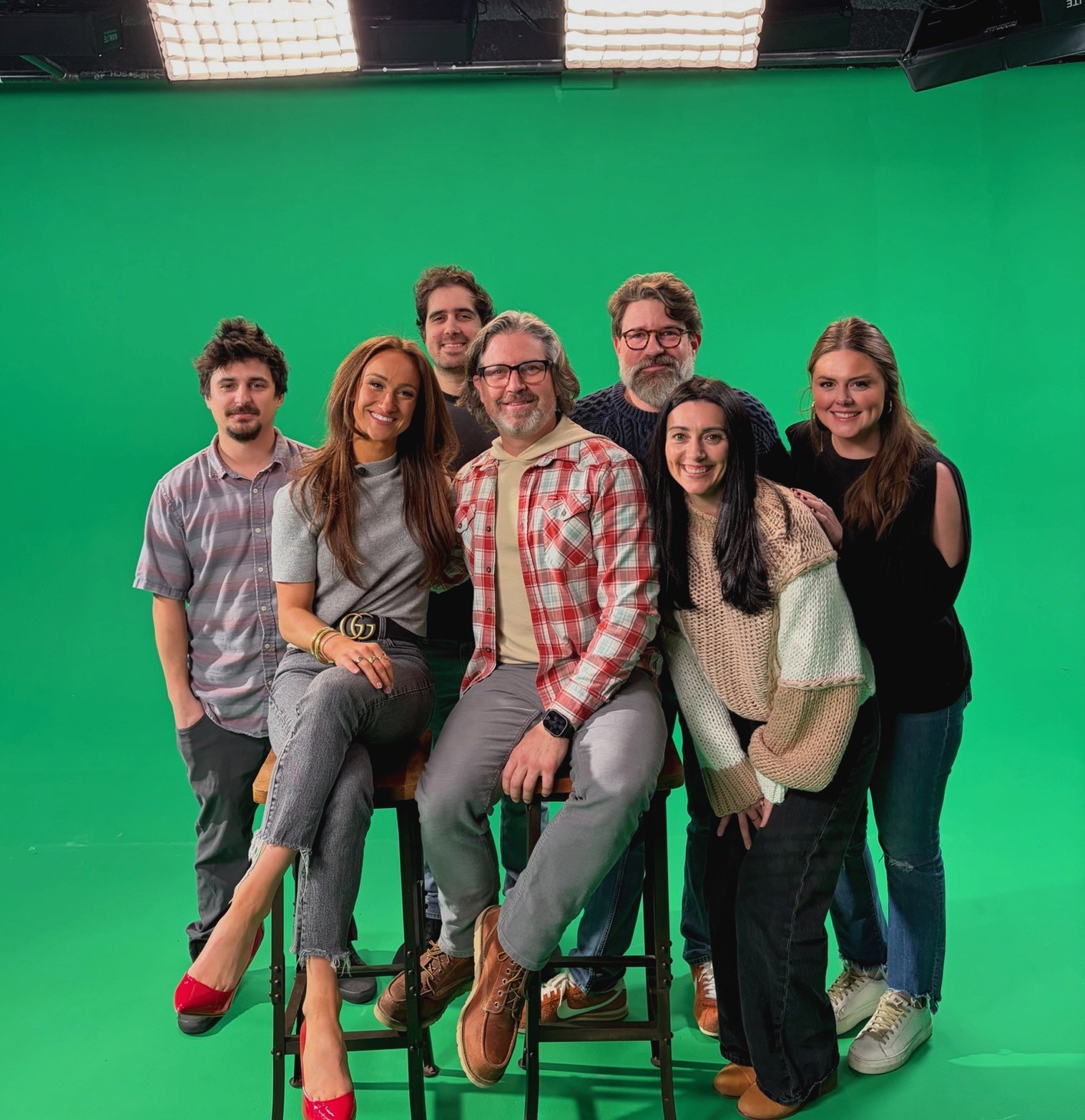
What the client never sees
Hey, Nikki here.
Virtual production can look like magic, but the room felt more like a load-in than a tech demo.
Every crew person knows the show is won or lost before the doors open. I walked into Kingfisher Studio by LEO Events expecting to be impressed by the wall. And I was. One minute we were in Nashville, TN, the next we were on a Paris sidewalk.
But the most impressive thing in that room wasn't on the wall. It was the team.
This week we go inside the studio and hear from the people building, lighting, animating, and editing these virtual worlds. What they kept coming back to — in every room, in every role — was how much had to happen before a single camera rolled.
Why this one matters:
A lot of people are drawn to this industry for show day. The energy, the moment, the payoff. But the people who last are the ones who fall in love with the build — the unglamorous, invisible work that makes the moment possible.
The virtual environment looks seamless because someone spent days building it. The lighting feels real because two teams — one physical, one digital — had to agree on every source before anyone hit record. The edit is clean because someone decided upfront how to capture it correctly.
The tool is impressive. The prep is what makes it work. That's not a virtual production truth. That's just the truth.
#1 Tech needs talent
Nobody on this team talked like the software does the job for you. They kept bringing it back to skill, taste, and knowing how all the parts work together.
Takeaway: Better tools still need good people behind them.
Try this: The next time a new piece of tech gets hyped, ask who still has to make it work in real life.
#2 Everything has to stay in sync — or the whole thing breaks
Tyler Montanino, the studio's video production specialist, is watching multiple feeds at once and tracking the exact moment something drifts. In virtual production, if the physical lighting and the digital environment don't match, the illusion falls apart instantly. There's no hiding it.
Takeaway: The departments you don't see are holding up the ones you do.
Try this: Find one person upstream or downstream from your role and ask what they need from you before show day to do their job well.
#3 The team is the real differentiator
Brett Clark, Director of Studio & Editorial, said it plainly: the equipment is the equipment. What makes the difference is the people. That came through in every room — not just in what they know, but in how they communicate, how they hand off, and how they solve problems when something doesn't work.
Takeaway: Great work looks smooth because the team behind it is solid.
Try this: When you size up a partner or crew, pay as much attention to how they communicate as what they can technically do.
If you want the full conversation, listen to Episode #57 of The Giggs Podcast: The Future of Virtual Production | Kingfisher by LEO Events. SPOTIFY | APPLE | YOUTUBE
— Nikki
P.S. One line I loved was when Brett said, “We make it look so simple.” That is true of a lot of great work in this industry. The cleaner it looks on the surface, the more discipline is usually holding it up underneath.